Wearable Art: When Art Becomes Part of Everyday Life
Wearable art is not a new idea. It's an old idea that most people forgot about somewhere between the invention of fast fashion and the moment everyone started dressing like they were on their way to the same meeting.
The concept is simple: art that lives on your body or travels with you rather than hanging on a wall. Clothing, accessories, bags, scarves, objects you carry or wear that happen to be designed or produced by an artist rather than a brand. The piece functions in daily life. It also happens to be a genuine piece of someone's creative practice.
What makes wearable art interesting in 2026 is not the concept. It's the execution. The gap between mass-produced "art-inspired" products and genuinely artist-designed pieces has widened to the point where the two categories share almost nothing in common except the visual format. One is a product with a pattern applied to it. The other is an artist's work translated into a form you can carry through your day.
This guide covers what wearable art actually means, why the category is growing, what separates genuine artist-made wearable art from mass-market imitation, and how abstract art specifically translates into everyday objects better than almost any other visual form.
What Is Wearable Art, Actually?
The wearable art definition that matters is this: functional objects designed or produced by artists, where the artistic content is the primary reason the object is interesting rather than just useful.
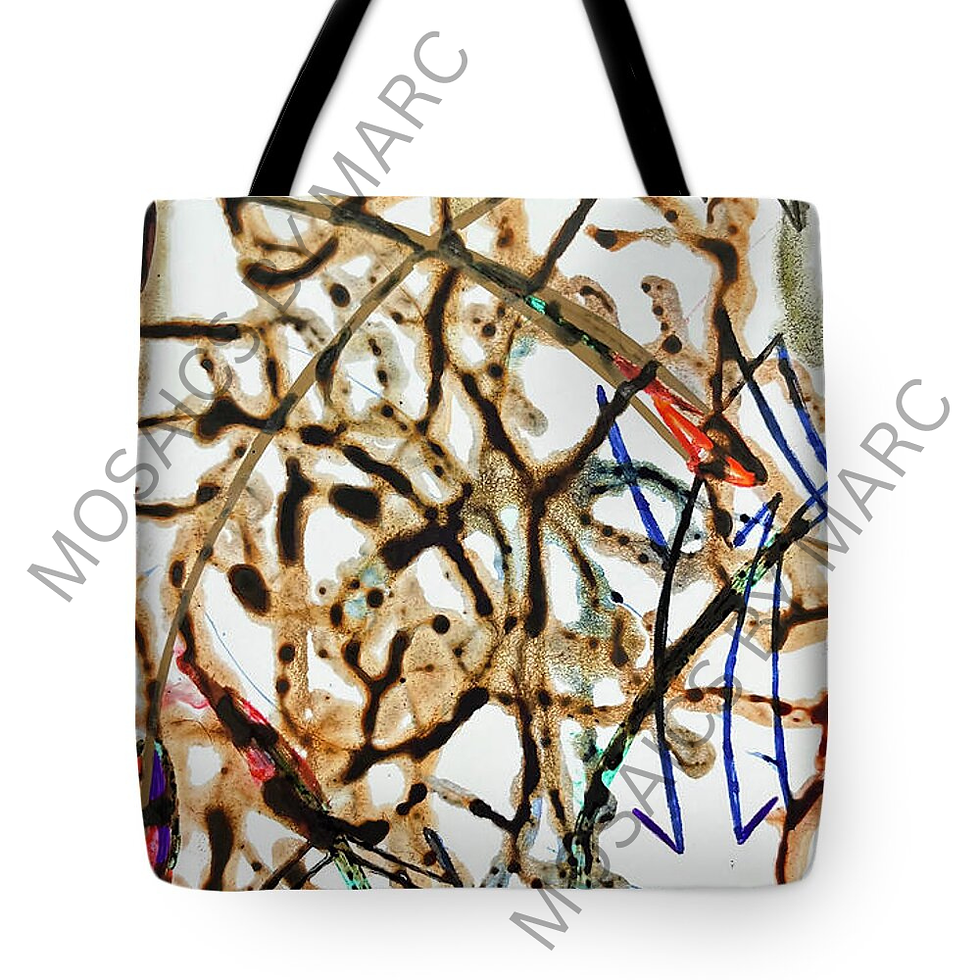
A plain canvas tote bag is a bag. An abstract art tote bag printed with a specific artist's original work is wearable art. The bag does the same job either way. What changes is the surface: one carries a design that was created to fill a product category, and the other carries a piece of someone's creative practice.
The distinction between wearable art and art-themed merchandise is real and worth understanding.
Wearable art has a specific artist behind it, a specific original work that the product reproduces or is derived from, and a production quality that respects the source. The artist's involvement in the product is genuine rather than nominal.
Art-themed merchandise uses art as a decorative motif without a specific artist or specific original work behind it. "Art-inspired" patterns, generic abstract designs, museum-shop reproductions of public-domain works: these are products that reference art rather than carrying it.
Both exist in the market. Both show up under the same search terms. Knowing which one you're looking at before you buy is the most important skill in the category.
Why Wearable Art Is Growing in 2026
The growth of wearable art as a category reflects three shifts happening simultaneously.
The accessibility shift. Original art on a wall starts at $200 and climbs from there. A tote bag carrying the same artist's work starts at $40 to $80. An art-inspired scarf or accessory can sit at a similar price point. Wearable art products have made owning a piece of a working artist's practice accessible to buyers who aren't in the market for wall art, or who want to engage with an artist's work in a format that fits their life differently.
The visibility shift. Wall art is private. Nobody sees the abstract painting in your living room unless they visit your home. A tote bag with an artist's abstract work on it goes to the grocery store, the office, the café, the farmers market. Wearable art puts the artist's work into public space in a way that wall art fundamentally can't.
For artists, this visibility matters. Every person who carries a tote bag with an artist's work on it is doing organic marketing that no ad budget can replicate. The bag isn't advertising. It's a genuine product that someone chose to carry because they respond to what's on it. That's a fundamentally different kind of visibility from paid promotion.
The authenticity shift. Buyers in 2026 increasingly want to know who made what they're buying and what process produced it. This applies to food, clothing, furniture, and art. Wearable art from a specific artist with a documented practice satisfies this need in a way that mass-produced "art-inspired" products don't. The tote bag isn't just attractive. It has a story: a specific artist, a specific original work, a specific process that produced the marks on the surface.
What Makes Abstract Art the Best Fit for Wearable Art
Not all art translates equally well to wearable formats. Photography, illustration, and representational painting all lose something when they move from wall-scale to bag-scale or accessory-scale. The image was composed for a specific size, and shrinking it changes the viewing experience.
Abstract art doesn't have this problem, and the reason is structural rather than aesthetic.
The content of abstract art is color, mark, and tonal relationship rather than depiction. These formal qualities read at any scale. An abstract painting with warm ochre passages and layered ink marks reads as visually interesting on a 36 by 48 inch metal print and reads as visually interesting on a 15 by 15 inch tote bag surface. The content doesn't shrink because the content was never about a subject rendered at a particular resolution.
This is why abstract art tote bags, abstract art scarves, and abstract art accessories work as a category while "landscape photography tote bags" mostly don't. The landscape loses its spatial grandeur at small scale. The abstract painting retains its visual language completely.
The other advantage of abstract art in wearable formats is versatility. An abstract tote bag in a warm earth-tone palette works with a wider range of outfits and contexts than a bag with a specific representational image on it. The abstract palette relates to what you're wearing through color rather than through subject, which means it coordinates rather than conflicts.
The Quality Markers of Genuine Wearable Art
The difference between genuine artist-designed wearable art and mass-market "art-inspired" products shows in three specific places.
Print resolution and tonal depth. On a genuine art tote bag, the tonal variation in the source artwork is visible: shifts within a color passage, edge quality in the marks, the overall complexity of the original work. On a mass-market product, the design tends toward flat color blocks with simplified edges. The original had depth. The product has a pattern.
Source documentation. Genuine wearable art products can tell you where the design came from: which specific original work by which specific artist. The production process, from original to product, is traceable. Mass-market products either have no specific source or reference a generic "art-inspired" origin without specifics.
Construction quality. Artist-made wearable art products tend toward higher construction quality because the artist has a reputational stake in the product that a mass manufacturer doesn't. A tote bag from an artist's own collection is a representation of their practice. A tote bag from a factory with a licensed design is a unit of inventory.
Wearable Art as Gifts for Art Lovers
Wearable art products solve a genuine problem in art gifting: the room-context problem.
Gifting wall art requires knowing the recipient's room palette, wall dimensions, furniture style, and existing décor. Gifting wearable art doesn't. A tote bag, a scarf, or an art-inspired accessory works regardless of the recipient's home because the product lives on them rather than on their wall.
For gifts for art lovers specifically, wearable art sits in a sweet spot: more personal than a gift card, more practical than a decorative object, more interesting than clothing from a conventional brand, and at a price point ($40 to $100 for most wearable art products) that works for birthdays, holidays, and thank-you occasions without the budget pressure of original wall art.
Artist-made gifts are specifically strong for recipients who care about provenance and process. A tote bag from a working artist, with a known original work behind the design, is a meaningfully different gift from a mass-produced bag with a pattern on it. The story matters to art lovers, and wearable art from a specific artist carries a story that generic products don't.
How Artists Are Turning Original Work Into Everyday Products
The production path from original artwork to wearable art product has become significantly more accessible for independent artists in the last five years.
The standard workflow: an artist creates an original work (painting, drawing, ink-on-paper abstraction). The original is scanned at high resolution with professional equipment. The scan is color-managed to ensure the reproduction matches the source. The image is then applied to the product surface through a process appropriate to the material: sublimation printing for fabric and polyester, direct-to-garment printing for cotton, dye sublimation for metal and ceramic.
For abstract art specifically, the quality of the scan matters more than it does for representational work. Abstract art's visual content lives in tonal transitions, edge quality, and the subtle variation within marks. A low-resolution scan flattens these qualities. A professional scan at 300 DPI or higher preserves them, which means the tote bag or accessory carries the same visual information as the original, at a different scale.
This production path is what separates artist-designed products from mass-market alternatives. The source is a specific original work. The scan captures the work's genuine visual content. The reproduction process preserves that content on the product surface. There's a traceable chain from the artist's hand to the object you're carrying.
Wearable Art and the Broader Art Collection
For buyers who already own an artist's wall art, wearable art products from the same artist create something interesting: an extended relationship with the artist's practice that spans multiple formats and multiple contexts.
The metal print is on the living room wall. The tote bag is on the shoulder at the farmers market. The scarf is at the office. The same artist's visual language appears in each, connecting them through palette and mark-making quality even though the formats are different.
This isn't just aesthetically interesting. It's how many artists are building sustainable practices in 2026. The wall art is the core of the business. The wearable art products extend the audience, lower the entry price for new collectors, and create touchpoints between the artist's work and the buyer's life that wall art alone can't.
For collectors and art supporters, purchasing wearable art from artists whose wall art you love is one of the most direct ways to support an independent practice. The margin on artist merchandise like a tote bag is smaller than on a metal print, but the aggregate effect of a broader product range is what allows many artists to sustain their practice full-time.
Marc's Wearable Art: What's Available
Marc's tote bags reproduce his original ink-on-paper abstract works on a functional everyday carry format.
The same designs that appear on the metal prints in the wall art collection appear on the tote bags, reproduced at a resolution that preserves the tonal depth and mark-making detail of the originals. The palette carries the same warmth: earth tones, deep ink blacks, ochre and amber passages, layered warm neutrals. The designs are non-preconceived abstract compositions built through Marc's layered ink process, which means no two originals look alike and the tote bags that reproduce them carry a visual identity that mass-produced pattern bags don't have.
Each tote bag is $60.
That sits above the mass-market printed bags that sell for $15 and have no artist behind them, well below the cost of the metal print the design was drawn from, and at a price point that makes wearable art accessible for personal use or as a gift for art lovers.
Browse Marc's tote bags to see the full collection. If you'd like to see the wall art the designs come from, browse the metal print collection here.
Frequently Asked Questions
Q: What is wearable art?
Wearable art refers to functional objects, clothing, bags, accessories, and everyday items, that are designed or produced by artists, where the artistic content is the primary reason the object is interesting. The category spans artist-designed tote bags, scarves, jewelry, clothing, and accessories that carry or reproduce an artist's original work. What distinguishes wearable art from art-themed merchandise is the presence of a specific artist, a specific original work behind the design, and production quality that respects the source.
Q: What is the difference between wearable art and art-themed merchandise?
Wearable art has a traceable artist, a specific original work that the product reproduces, and production quality that preserves the visual content of the source. Art-themed merchandise uses art as a decorative motif without a specific artist or original behind it: generic abstract patterns, museum-shop reproductions of public-domain works, and "art-inspired" designs without traceable origin. Both exist in the market. The difference shows in whether the product carries genuine artistic substance or just an art-adjacent surface.
Q: Are abstract art tote bags considered wearable art?
Yes, when the tote bag reproduces a specific original work by a specific artist at a print quality that preserves the tonal depth and mark-making quality of the source. An abstract art tote bag from a working artist's own collection is wearable art. A mass-produced tote with a generic abstract pattern is an abstract-themed product. The distinction is in the source and the production chain, not just the visual format.
Q: Why does abstract art work so well on tote bags and accessories?
Abstract art translates to smaller formats better than representational art because its content is color, mark, and tonal relationship rather than depiction at a specific scale. A landscape painting loses its spatial grandeur when reduced to bag size. An abstract painting with strong tonal contrast and visible mark-making retains its visual language at any scale. This is why abstract art tote bags work as a product category while most representational art bags don't.
Q: Is wearable art a good gift for art lovers?
Yes, and one of the more practical options. Wearable art bypasses the room-context problem that makes wall art risky as a gift: the recipient uses the product rather than needing to find a specific wall and palette match. At $40 to $100 for most wearable art products, the price point suits birthdays, holidays, and casual gifting. A tote bag or accessory from a working artist communicates that the gift was chosen with aesthetic consideration rather than defaulting to a generic option.
Q: How much should wearable art cost?
Under $20 almost always means mass-produced with no specific artist and print quality that degrades. $40 to $100 is the range where genuine artist-made wearable art lives: quality construction, high-resolution reproduction of original abstract work, and a product that carries real artistic provenance. Marc's tote bags are $60, which sits in the middle of the genuine wearable art range.
Q: How do artists turn original work into wearable art products?
The standard path: the artist creates an original work. It's scanned at high resolution with professional equipment and color-managed to match the source. The image is then applied to the product surface through an appropriate reproduction process (sublimation printing for fabric, direct-to-garment for cotton, dye sublimation for metal). The quality of the scan and the reproduction process determine whether the product carries the visual depth of the original or just a simplified version of it.
Q: Can wearable art be part of an art collection?
Yes. For buyers who already own an artist's wall art, wearable art products from the same artist create an extended relationship with the artist's practice across multiple formats and contexts. The wall art is in the home. The tote bag is in daily life. The same visual language connects both. Many serious art supporters purchase wearable art products from artists whose wall art they collect as a way of supporting the practice and extending their engagement with the work.
Q: What should I look for in quality wearable art?
Three things: a traceable source (a specific original work by a named artist, not a generic "art-inspired" design), print quality that preserves the tonal depth and mark-making detail of the original work (not flat color blocks), and construction quality appropriate to daily use (heavyweight canvas for tote bags, quality fabric for scarves, durable hardware for accessories). The product should carry the same visual substance as the original work, at a different scale.
Q: Where can I buy wearable art from independent artists?
Artist-direct websites are the best source: the provenance is transparent, the pricing reflects no platform commission, and the artist has a direct stake in the product quality. For Marc's abstract tote bags, browse the collection here at $60 each. Other sources include artist cooperatives, art fairs where artists sell products alongside wall art, and curated platforms like Society6 that host artist-designed products (vet carefully for genuine artist involvement versus generic design uploads).
Final Thoughts
Wearable art works because it puts an artist's practice into the one place wall art can't reach: your daily life.
The metal print is in the living room. You see it in the morning and in the evening. The tote bag goes everywhere else. It's at the coffee shop, in the grocery aisle, on the train, draped over the back of a chair at a restaurant. The same marks, the same palette, the same visual language, moving through the day with you rather than waiting at home for you to come back.
That's what "bringing art into everyday life" actually means. Not a philosophy. A tote bag.
Browse Marc's tote bags and wall art collection to see both formats.
Product details and pricing reflect mosaicsbymarc.com as of 2026. Pricing and availability may change.


Comments